
Have you ever wondered what specialized care support really means? While general home care helps with daily tasks like cooking, cleaning, and personal hygiene, specialized care goes a step further. Specialized home care focuses on supporting people with specific medical conditions, disabilities, or complex medical health needs.
At its core, home specialized care support is about providing personalised care that improves safety, comfort, and quality of life. It ensures that individuals receive the right level of professional attention while remaining in the familiar environment of their own home.
What Is Specialized Care Support?
Specialized care support refers to professional care designed for individuals who need more than basic assistance. This type of care is often delivered by trained caregivers who understand specific conditions and how to manage them safely.
Specialized care may include:
• Monitoring health conditions
• Supporting recovery after surgery or illness
• Assisting people with disabilities
• Providing dementia or Alzheimer’s support
• Helping with mobility and medical equipment
The goal is to provide personalized care support that meets each person’s unique physical, emotional, and medical needs.
Why Specialized Care Support Matters?
Specialized care support plays an important role in helping people live safely and independently. It reduces hospital visits, improves daily comfort, and provides reassurance to families.
Some key benefits include:
• Personalised care plans tailored to individual needs
• Improved safety, especially for people with complex conditions
• Emotional support and companionship
• Support for families and loved ones
• Better quality of life at home
Home specialized care support allows people to stay in familiar surroundings while receiving professional help.
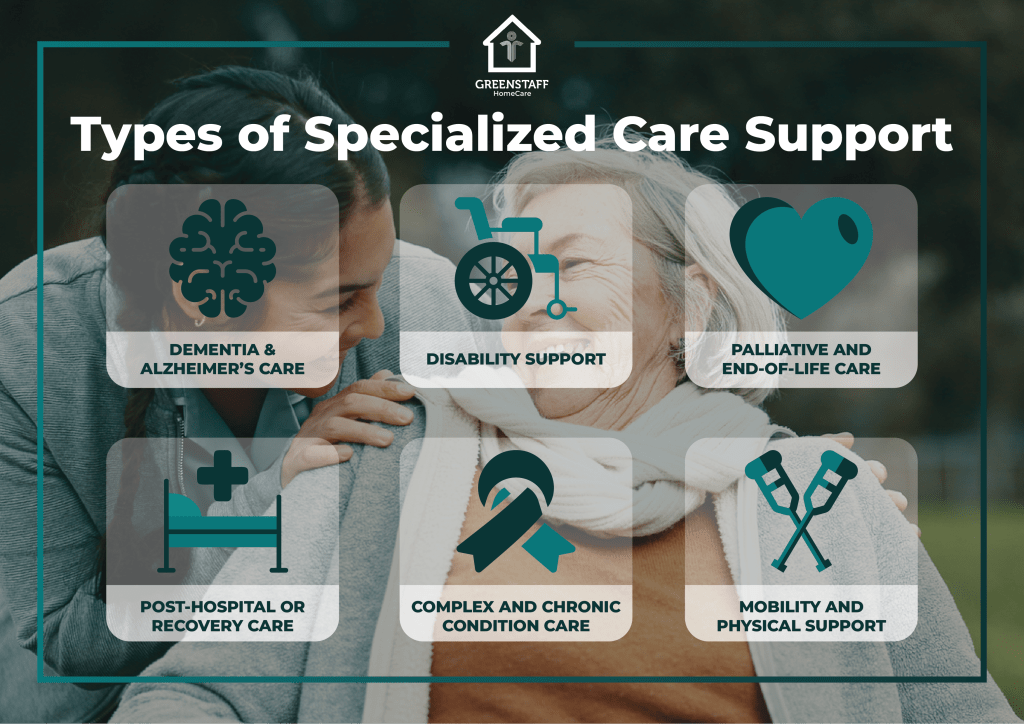
Types of Specialized Care Support
There are many different types of specialized care, depending on the individual’s needs.
1. Dementia and Alzheimer’s Care
Caregivers support individuals with memory loss, confusion, and behavioural changes. This includes helping with routines, providing reminders, and ensuring safety.
2. Disability Support
This type of care helps individuals with physical or learning disabilities. It may include mobility assistance, personal care, and support with daily activities.
3. Palliative and End-of-Life Care
This care focuses on comfort, dignity, and emotional support for individuals with serious or life-limiting illnesses.
4. Post-Hospital or Recovery Care
After surgery or illness, specialized care helps individuals recover safely at home by monitoring health and assisting with daily needs.
5. Complex and Chronic Condition Care
This includes support for people living with conditions such as stroke, Parkinson’s disease, multiple sclerosis, or severe physical limitations.
6. Mobility and Physical Support
Caregivers assist with walking, transferring, and using mobility equipment to prevent falls and injuries.
Specialized Care at Home: A Personal Approach
One of the biggest advantages of home specialized care support is the ability to receive professional care without leaving home. This allows individuals to stay close to family, maintain routines, and feel more comfortable.
Care is tailored to each person, ensuring they receive personalized care with the right level of support while maintaining dignity and independence.
Final Thoughts
Specialized care support is essential for individuals with complex health needs. It provides professional, compassionate assistance that improves safety, comfort, and overall well-being.
By offering personalised home specialized care support, healthcare providers help individuals live with dignity, independence, and confidence in their own homes.


Leave a comment